Healthcare in the AGI Era: Pillar Overview
An overview of how AGI is changing diagnostics, drug discovery, mental health, and the clinician's role — and what trust and safety require.
Executive summary
Healthcare is being reshaped from four directions at once: AI-assisted diagnostics, computational drug discovery, scalable mental-health support, and the operational layer of clinical work. Each is bringing real benefits and real safety challenges. The clinician remains central, with the role shifting toward judgment, integration, and trust.
Key concepts
- AI-assisted diagnostics
- Drug discovery and AlphaFold
- Mental-health access
- Clinician role
- Regulation and trust
Diagnostics: faster, more accurate, but supervised
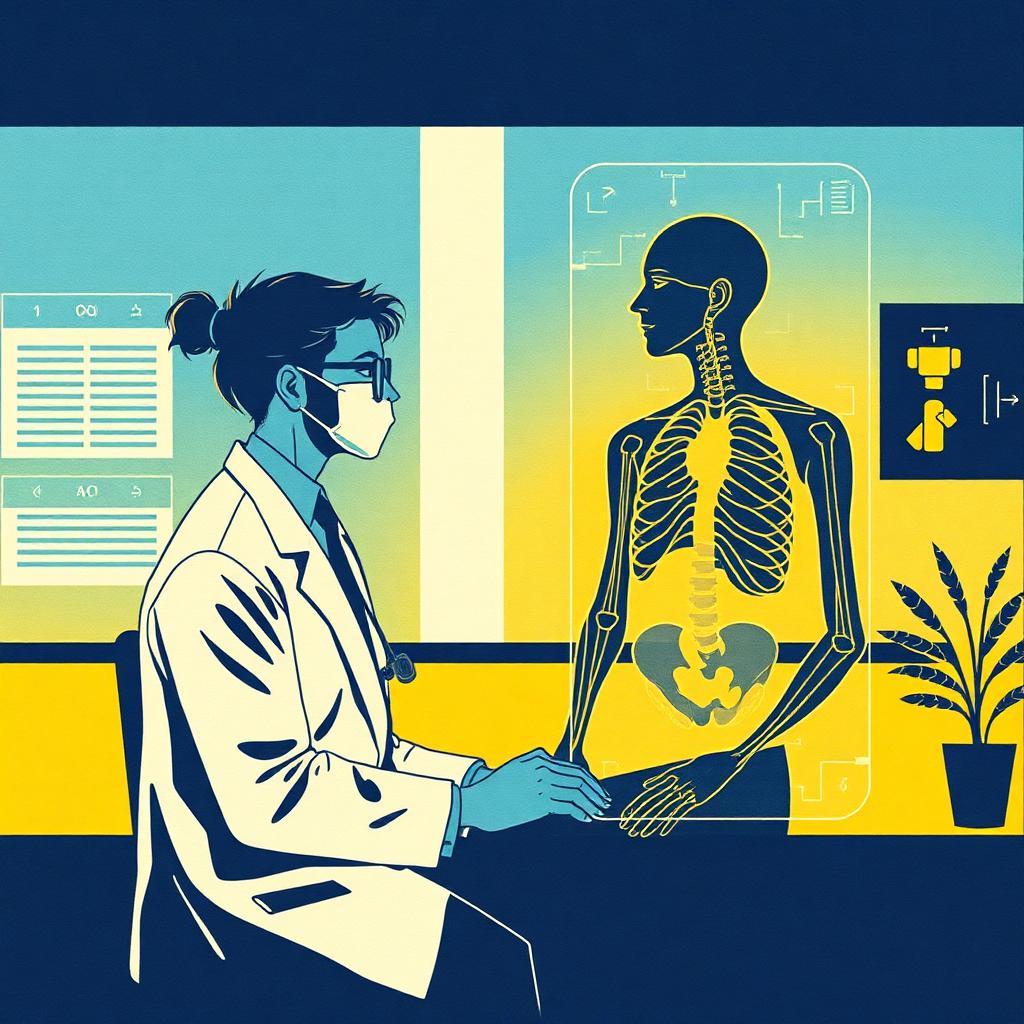
Imaging — radiology, pathology, ophthalmology — has the strongest evidence base for AI assistance. Multiple peer-reviewed studies show non-inferior or superior accuracy when AI augments clinicians; degraded outcomes when AI replaces them.
The deployed pattern is AI as a second reader, with the clinician making the final call. The WHO and major regulators are aligning on this human-in-the-loop standard.
Drug discovery: a generational shift
AlphaFold turned protein-structure prediction from a decade-long lab problem into a database lookup. Generative chemistry, target identification, and clinical-trial design are all being reshaped. Time-to-clinic for new molecules is shortening.
Mental health: access and risk
AI mental-health companions are filling a massive access gap — most of the world has no realistic path to a therapist. They also raise serious safety questions about crisis handling, dependency, and harm. Regulation here is catching up.
The clinician's role
Clinicians are not being replaced. The role is shifting toward integration, communication, judgment under uncertainty, and care decisions. Routine tasks are being lifted; harder tasks remain.
Key takeaways
- 01AI-assisted diagnostics are deployed and evidence-supported.
- 02Drug discovery is being structurally accelerated.
- 03Mental health is the highest access-impact area and the highest safety-risk area.
- 04Clinicians remain central; the role shifts toward judgment and integration.
- 05Regulation, not capability, is now the rate-limiter on deployment.
Frequently asked questions
Will AGI replace doctors?
No. Diagnostic AI is supervised by clinicians by design, and the higher-trust, higher-judgment parts of medicine are getting harder, not easier, to automate.
Is AI mental-health support safe?
It is uneven. Some products with strong safety design and crisis protocols help; others fall short. Regulation is catching up.
What about patient privacy?
Health data is among the most sensitive in any AI system. Regulation (HIPAA in the US, GDPR + AI Act in the EU) sets the baseline; reputable providers go further.
Further reading
Related hubs
Where AI is genuinely improving diagnostic accuracy, where it is not, and how the clinical workflow is changing as a result.
How protein-structure prediction, generative chemistry, and AI-led target identification are reshaping the pharmaceutical pipeline.
AI mental-health support is filling a massive access gap and raising serious safety questions. What works, what does not, and what regulators are doing.
What clinicians do more of, what they do less of, and how training and trust evolve when AI handles much of the cognitive load.