How the Physician's Role Changes in the AGI Era
What clinicians do more of, what they do less of, and how training and trust evolve when AI handles much of the cognitive load.
Executive summary
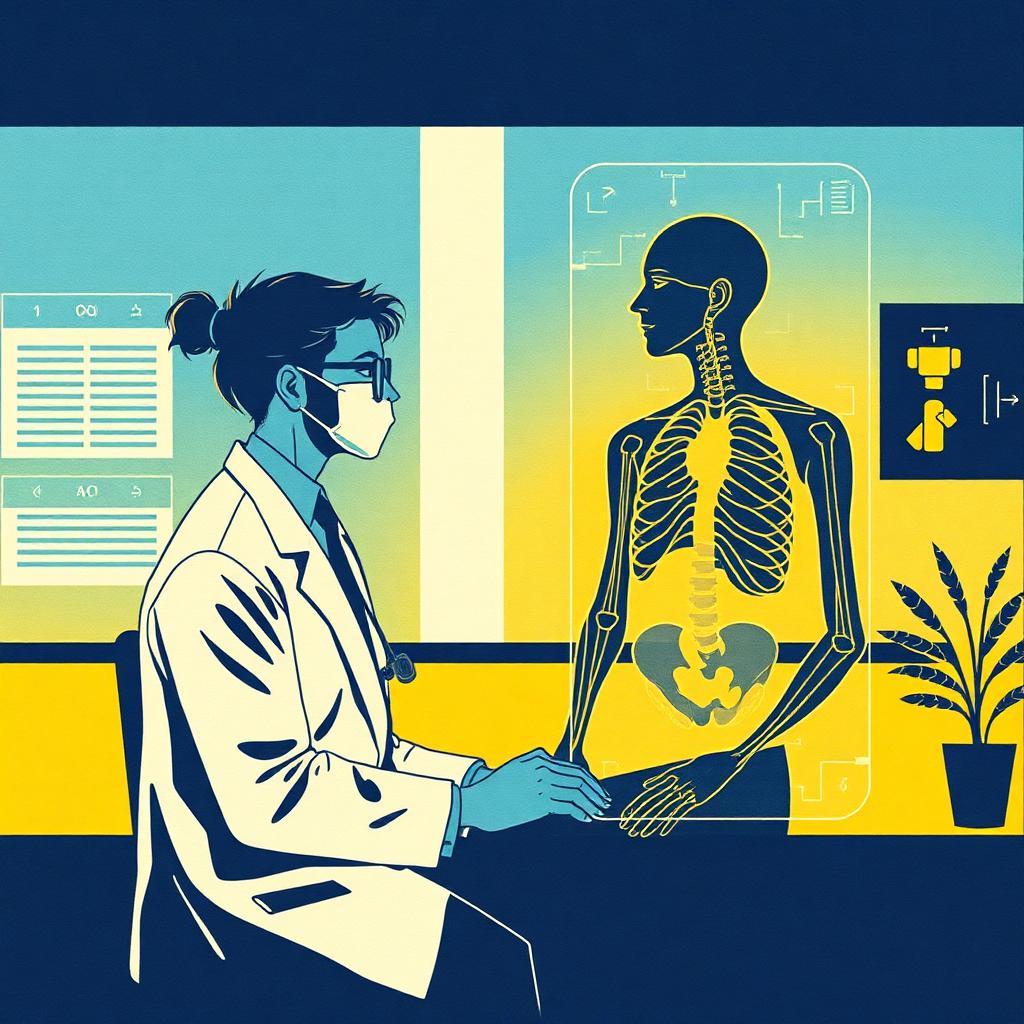
Physicians are not being replaced. The cognitive load of differential diagnosis, documentation, and routine review is being lifted. The harder parts — judgment, communication, complex case integration, and trust — are becoming the centre of the role.
Key concepts
- Cognitive offloading
- Documentation burden
- Shared decision-making
- Specialist integration
- Physician training
What is being lifted
AI scribes are removing hours of documentation per week. Differential-diagnosis and decision-support tools surface considerations the clinician might have missed. Routine triage is being automated.
What is harder
Communicating bad news, managing complex multi-system cases, coordinating across specialists, and making judgment calls under uncertainty all remain core human work — and are becoming a larger share of clinical time.
Training
Medical schools are adding AI-in-medicine modules and shifting toward training in evaluation of AI outputs, shared decision-making, and integrative judgment.
Trust
The patient–clinician relationship is the irreducible centre of medicine. AI helps clinicians be more present in that relationship by removing other burdens.
Key takeaways
- 01Documentation and routine review are being lifted.
- 02Communication and integrative judgment are becoming central.
- 03Medical training is adapting to AI-augmented practice.
- 04Trust is the irreducible centre of medicine.
Frequently asked questions
Are AI scribes already in use?
Yes — several large health systems have rolled out ambient AI scribes with reported reductions in clinician burnout and after-hours work.
Will fewer doctors be needed?
Not in the near term. Most health systems are short of clinicians; AI tools make the existing workforce more effective.
Further reading
Related hubs
How AGI is reshaping diagnostics, drug discovery, mental health, and the role of clinicians — and what trust, access, and safety require.
Where AI is genuinely improving diagnostic accuracy, where it is not, and how the clinical workflow is changing as a result.
How protein-structure prediction, generative chemistry, and AI-led target identification are reshaping the pharmaceutical pipeline.