AI-Augmented Diagnostics: Imaging, Pathology, and Decision Support
Where AI is genuinely improving diagnostic accuracy, where it is not, and how the clinical workflow is changing as a result.
Executive summary
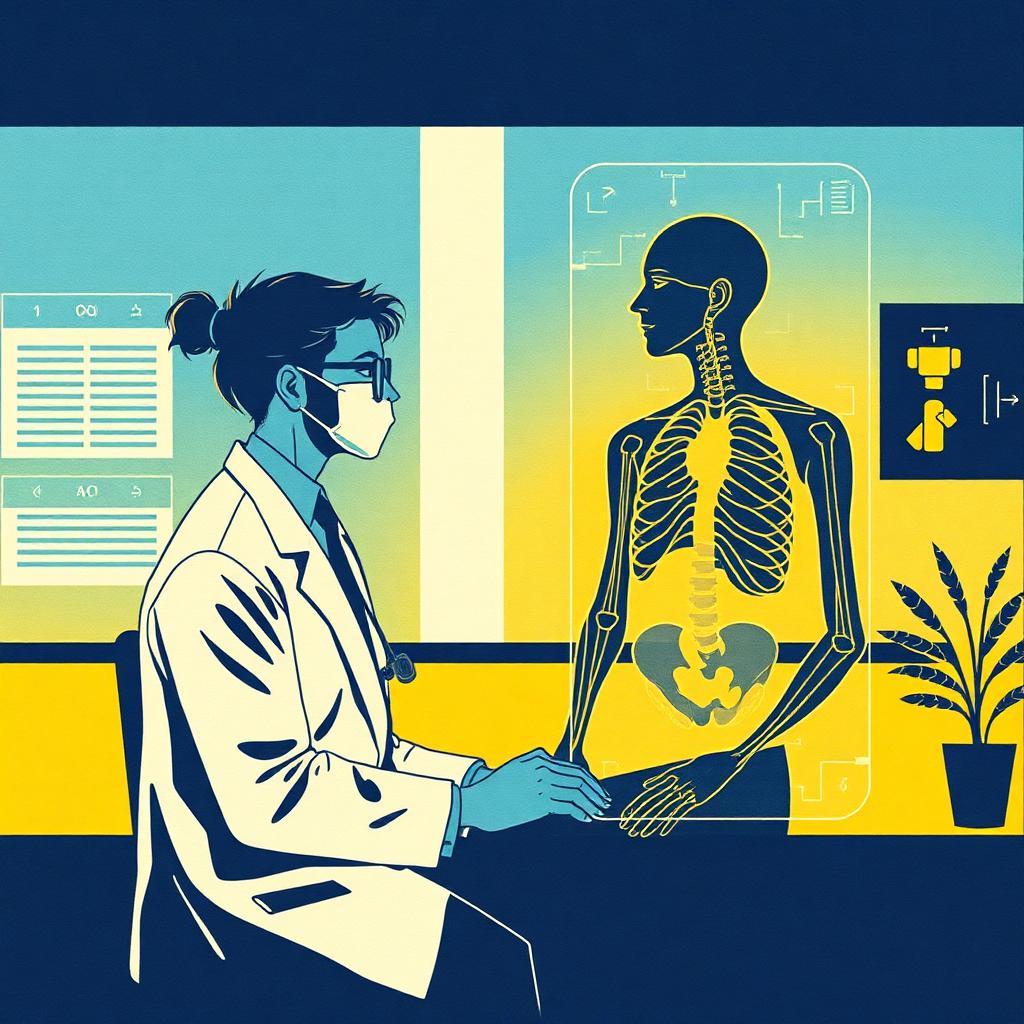
AI-augmented diagnostics is the most mature clinical AI application. Imaging shows the strongest evidence, with several FDA-cleared systems in active use. The deployed pattern is human-in-the-loop, with AI as a second reader and the clinician making the final call.
Key concepts
- Computer-aided detection (CADe)
- Radiology workflow
- Pathology
- Ophthalmology
- Model drift
Where the evidence is strong
Diabetic retinopathy screening, mammography second-reader, skin-lesion triage, and chest-X-ray triage all have peer-reviewed evidence of clinical benefit when AI augments a clinician.
Where it is weaker
Generalist diagnostic AI across all conditions is not yet at clinical reliability. Studies show degraded performance when deployed populations differ from training populations.
Workflow integration
The largest gains come from integration into the existing radiology and pathology workflows, not standalone tools. Most failed deployments fail on workflow, not on model accuracy.
Model drift and oversight
Models drift as imaging hardware, patient demographics, and disease prevalence change. Ongoing monitoring is now considered standard practice.
Key takeaways
- 01Imaging is the most mature application area.
- 02Deployed pattern is AI second-reader with clinician decision.
- 03Generalisation outside training population remains weak.
- 04Workflow integration and monitoring matter more than raw model accuracy.
Frequently asked questions
Are AI radiologists better than human radiologists?
On narrow benchmarks, sometimes. In clinical settings, AI plus a radiologist beats either alone, which is why the deployed pattern is augmentation, not replacement.
Are these tools regulated?
Yes — FDA in the US, MHRA in the UK, CE marking and the AI Act in the EU. Several hundred AI/ML-enabled medical devices are cleared in the US alone.
Further reading
Related hubs
How AGI is reshaping diagnostics, drug discovery, mental health, and the role of clinicians — and what trust, access, and safety require.
How protein-structure prediction, generative chemistry, and AI-led target identification are reshaping the pharmaceutical pipeline.
AI mental-health support is filling a massive access gap and raising serious safety questions. What works, what does not, and what regulators are doing.