Neuroscience and AGI
Artificial neural networks borrowed inspiration from biology, then diverged. Understanding what brains actually do - and where the analogy breaks - is essential to thinking clearly about AGI.
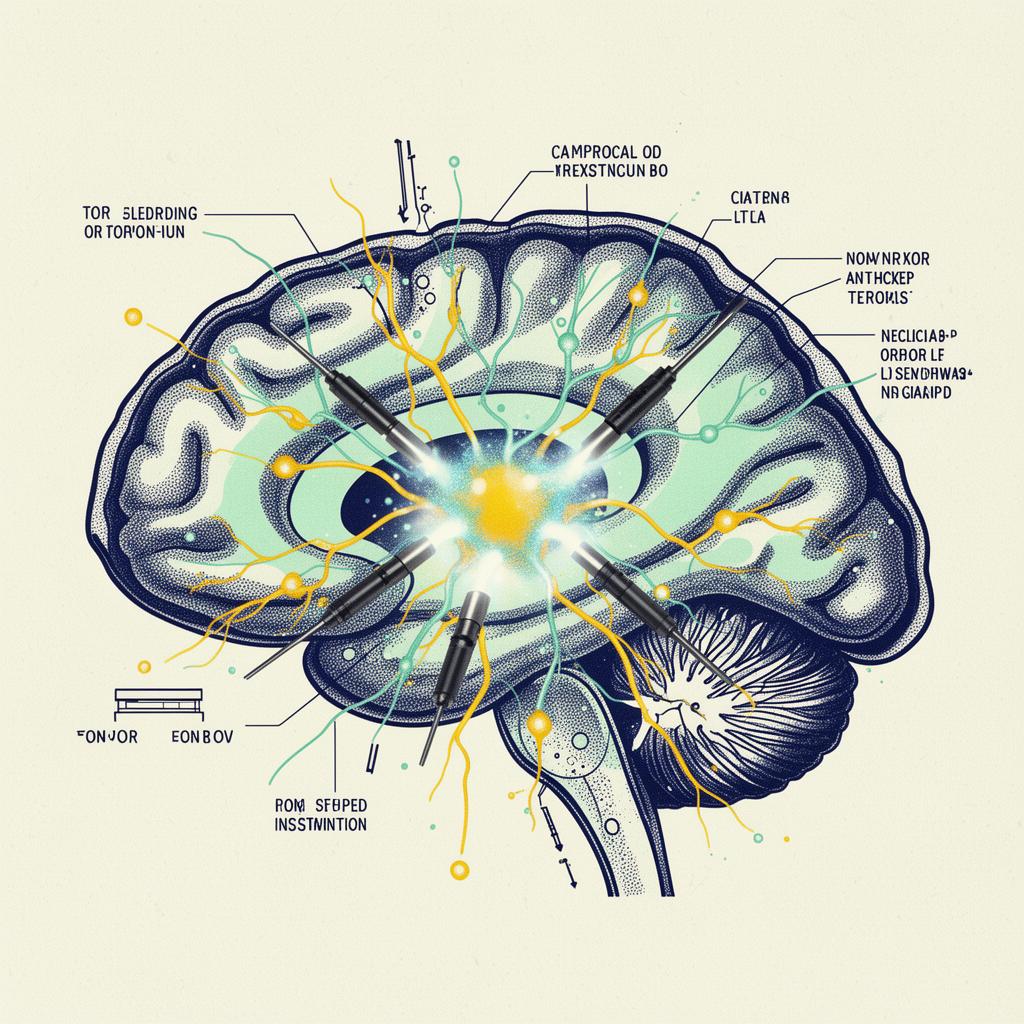
Neuroscience
The scientific study of the nervous system - from molecules and synapses to systems and cognition.
Cognitive Science
The interdisciplinary study of mind: psychology, neuroscience, linguistics, philosophy, computer science, and anthropology together.
Neural Networks
Mathematical abstractions loosely inspired by biological neurons. Modern deep networks share structural ideas with brains but differ profoundly in learning rules, energy use, and architecture.
Brain Architecture
Specialised regions (cortex, hippocampus, basal ganglia, cerebellum) coordinate through long-range connectivity. Generality emerges from the orchestration, not any single area.
Attention Systems
The brain has multiple, overlapping attention networks - alerting, orienting, and executive. AI attention mechanisms are far simpler but inspired by the same problem.
Memory Systems
Working, episodic, semantic, and procedural memory map to distinct neural substrates. Most AI systems collapse these into a single weight matrix and context window.
Learning Systems
Reinforcement, supervised, and self-supervised learning all have neural analogues - reward prediction errors in dopamine, statistical learning in cortex, and active inference at large.
Neuroplasticity
Synaptic and structural change in response to experience. Continual, local, and energy-efficient - features modern AI is still working to replicate.
Brain-Computer Interfaces
Bidirectional links between neural tissue and computers - from cochlear implants to high-channel-count cortical arrays - that increasingly shape how humans and machines may eventually share representations.
Where biology and silicon diverge
The brain runs on roughly 20 watts. Frontier AI training runs use megawatts. Neurons fire at tens of hertz; transistors switch at gigahertz. Brains learn continually from sparse experience; deep networks learn in batches from massive datasets. Brains are embodied and motivated; current AI systems are neither.
These differences mean that achieving general intelligence in machines is not simply a matter of scaling existing networks until they look more like brains. It may require new learning algorithms, new memory architectures, and new forms of grounding in the physical and social world.
From neurotechnology to brain-computer interfaces
Neurotechnology is the engineering arm of cognitive neuroscience: tools that record, stimulate, or interface with the nervous system. Clinical milestones include cochlear implants (over one million recipients worldwide), deep brain stimulation for Parkinson's, and the first wave of high-channel cortical arrays. In 2024, Neuralink's first human brain computer interfacerecipient demonstrated cursor control by thought; Synchron's stentrode and Blackrock's Utah array continue parallel clinical programs, and academic groups at UCSF and BrainGate have shown speech decoding from motor cortex at conversational rates.
The vocabulary overlaps: BCI, brain machine interface, neural interface, and neural implant all describe variations on the same idea - bidirectional communication between neural tissue and computers. Non invasive BCI approaches such as EEG, fNIRS, and emerging optically-pumped magnetometers trade resolution for accessibility. Underneath all of them sits neural decoding: the machine-learning problem of translating brain signal decoding into intent, language, or motor commands. Together with neural engineering and brain mappingefforts like the Human Connectome Project and the EU's Human Brain Project, this work defines what human brain research can now measure.
The same toolchain is being explored for brain health, cognitive enhancement, memory enhancement, attention enhancement, and clinical neurostimulation- transcranial magnetic stimulation (TMS) is FDA-cleared for depression and OCD, and focused-ultrasound neuromodulation is in active trials. The label digital neurotechnology is increasingly used for the consumer-facing layer (wearables, closed-loop apps), with ethical and regulatory questions catching up quickly.
For the cognitive-augmentation side of this story, see Human + AI Collaboration; for long-horizon implications of merging biological and artificial cognition, see Future Intelligence.