Understanding AGI
before it rewrites
everything.
A friendly, technically honest field guide to artificial general intelligence, human cognition, neuroscience, and the strange space where they meet.
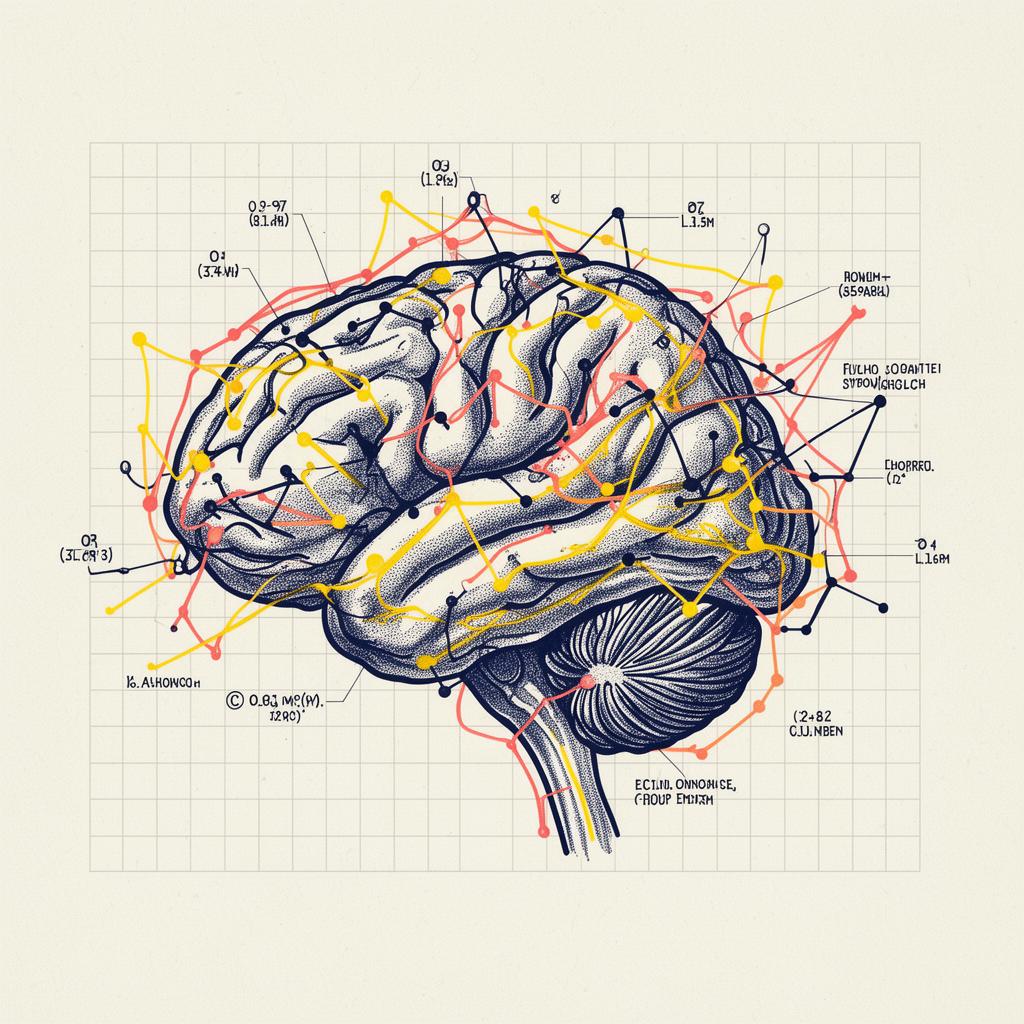
What is artificial general intelligence?
Artificial general intelligence (AGI) is a hypothesised form of machine intelligence able to learn, reason, and transfer knowledge across the full range of cognitive tasks at or above human level. Unlike today's narrow AI, AGI would generalise to unfamiliar problems with little supervision, hold long-term memory, and pursue goals over extended horizons.
What is human intelligence?
Human intelligence is the product of roughly 86 billion neurons and 100 trillion synapses organised into specialised but deeply interconnected systems for perception, memory, language, planning, emotion, and social cognition. It is continual, embodied, energy-efficient (about 20 watts), and still the only known example of general intelligence.
The complete map of intelligence.
brains, machines, and the
space between them.
What is AGI, really?
The clearest possible definitions of narrow AI, generative AI, AGI, and superintelligence - without the hype, without the doom.
AI vs AGI
1950 to 2026 timeline
Human intelligence
Working memory, attention, executive function, creativity, and the still-unsolved puzzle of conscious experience.
How AGI could change the world
Brains <-> Networks
Human + AI collaboration
Future intelligence
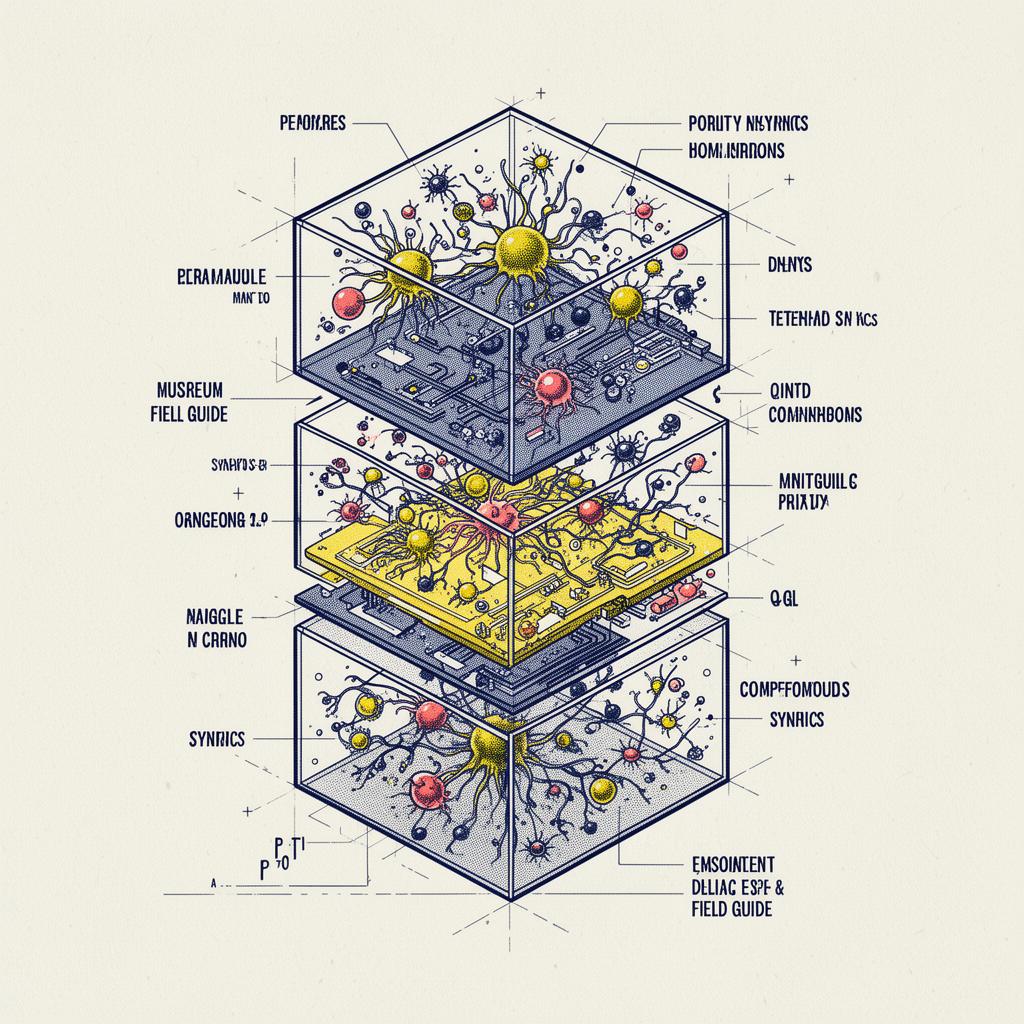
Intelligence is a stack, not a single trick.
Whether biological or artificial, general intelligence emerges from many overlapping systems working together: perception that turns signals into structure, memory that binds experience over time, learning that updates beliefs, reasoning that composes new plans, and motivation that decides what is worth doing.
Today's large language models are extraordinary at one slice of that stack - pattern-rich language modelling. Genuine AGI requires the rest of the stack to be solved too: persistent memory, sample-efficient learning, abstract reasoning, grounded action, and value alignment. That is the research frontier.
The question is not if, but what kind.
Whether AGI arrives in 2030 or 2060, the harder question is what kind of intelligence we choose to build, who gets access to it, and how it interacts with the only general intelligence we already have - ours. That is what this field guide is for.

The questions everyone asks first.
What is artificial general intelligence (AGI)?+
Artificial general intelligence (AGI) is a hypothesised machine intelligence that can learn, reason, and transfer knowledge across the full range of cognitive tasks at or above human level. Unlike narrow AI, which is trained for one domain, AGI would generalise across novel problems with little supervision.
How is AGI different from today's AI like ChatGPT?+
Today's frontier systems are powerful narrow AI - large language models trained on text. They show flashes of general reasoning but remain brittle outside their training distribution, lack persistent memory, and cannot reliably plan over long horizons. AGI would handle all of these as a baseline.
When will AGI arrive?+
Forecasts vary widely. Surveys of AI researchers in 2023-2025 place 50% probability of human-level machine intelligence anywhere between 2030 and 2060, with significant disagreement. Lab leaders at OpenAI, Anthropic, and Google DeepMind have publicly discussed timelines as short as 2027-2030.
Is AGI safe?+
AGI safety is an open research field. The main concerns are alignment (ensuring the system pursues human-intended goals), misuse (deliberate harm by humans wielding powerful systems), and systemic risks (concentration of power, labour disruption). Frameworks like the EU AI Act and NIST AI RMF formalise some of these concerns.
How does AGI relate to neuroscience?+
Modern AI borrowed loose inspiration from biological neurons but diverged sharply. Neuroscience still informs AGI research through ideas about attention, memory systems, neuroplasticity, and embodied cognition - and brain-computer interfaces may eventually let humans and AI share representations directly.
The labs racing toward general intelligence.
A handful of frontier labs now drive most public progress on large-scale machine intelligence. Each has a distinct safety posture, capability profile, and publication culture.
The vocabulary of intelligence, in one place.
Every claim on this site links back to a primary source. These are the load-bearing concepts you will meet again and again - each links to its full definition in theglossaryand the relevant deep-dive hub.
Systems optimised for a single domain - chess, translation, image classification. The vast majority of deployed AI today.
The 2017 architecture (Vaswani et al.) that uses self-attention to model long-range dependencies and underpins every frontier LLM.
LLMs (o1, o3, Claude, Gemini) trained with reinforcement learning to think step-by-step before answering.
The technical problem of building AI systems that pursue the goals their principals actually intended.
The brain's lifelong capacity to rewire its synaptic connections in response to experience and learning.
Devices (Neuralink N1, Synchron Stentrode, Utah Array) that read neural signals to control external systems.
Intelligence treated as an economic resource - produced, traded, and accumulated like financial capital.
A hypothetical system whose general cognitive performance substantially exceeds the best human minds across every domain.
Designs in which humans review, correct, or approve AI outputs at critical decision points.
Citation-first. Hype-free.
Every substantive claim on ZootAGI links to a primary or peer-reviewed source - arXiv preprints, Nature / Science papers, official lab publications, government frameworks (EU AI Act, NIST AI RMF, UK AISI), and benchmark releases.